
Geomagnetic storms lit up skies across the world after a powerful G4 solar storm struck Earth on January 19. The event pushed the northern lights far beyond polar regions, reaching mid-latitude locations in Europe, Asia, and the United States.
The intense auroral display was caused by a fast-moving coronal mass ejection from the Sun. Space weather agencies confirmed that geomagnetic activity fluctuated for hours, creating repeated waves of visible auroras.
Geomagnetic storms drive widespread aurora sightings
The geomagnetic storms began after a coronal mass ejection slammed into Earth’s magnetic field in the afternoon of January 19. The solar eruption followed a strong X-class solar flare that occurred roughly one day earlier. Due to its speed, the solar material reached Earth much faster than usual.
Once the impact occurred, geomagnetic conditions escalated rapidly to G4, which is classified as severe on the official space weather scale. These levels are rare and capable of pushing auroral activity far away from the poles. As a result, the northern lights were visible in regions that do not normally experience them.
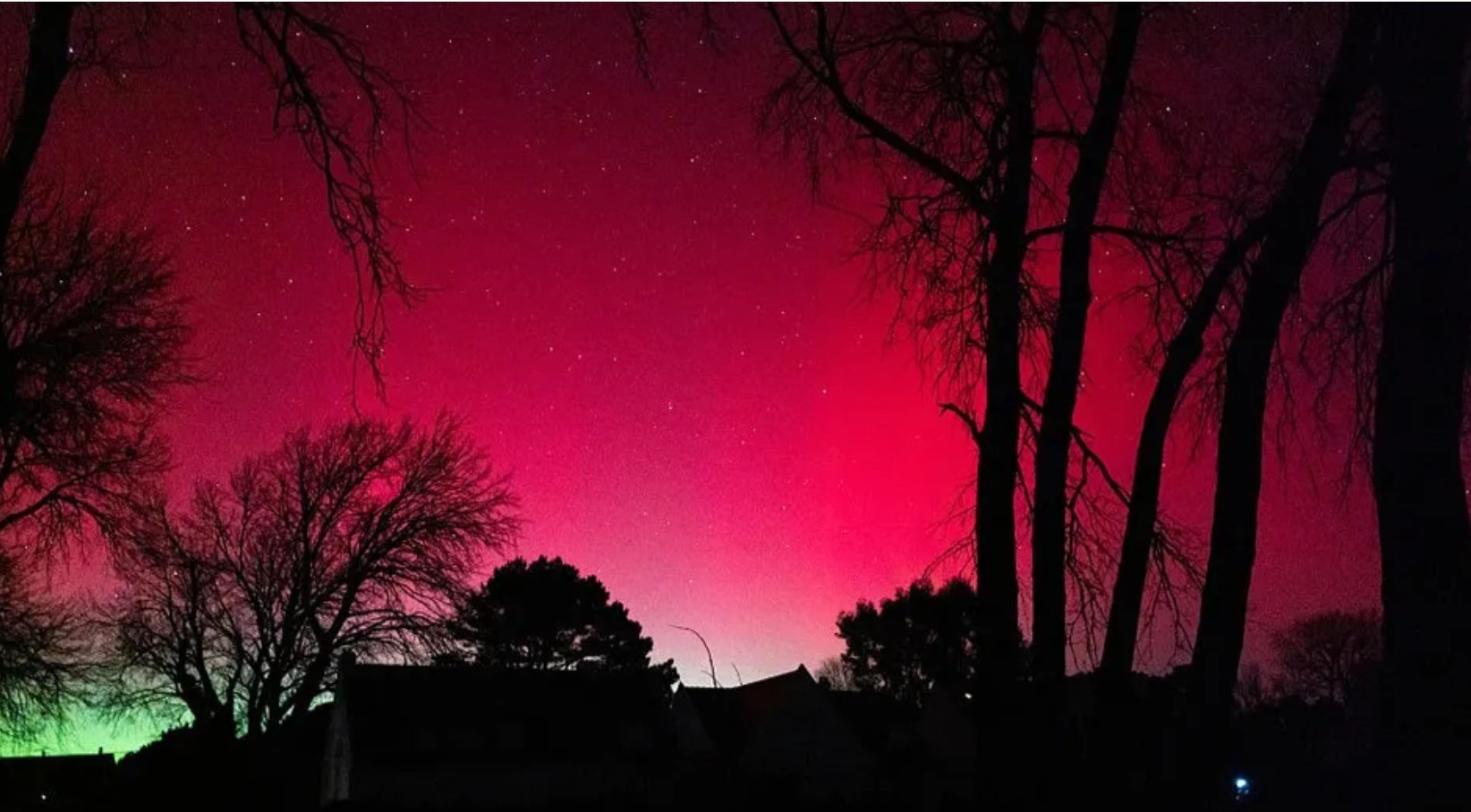
Observers reported auroras across Germany, France, Hungary, the Netherlands, and parts of the United Kingdom. In North America, sightings extended as far south as New Mexico and other southwestern states. Similar displays were also recorded in northern China, where vivid red, green, and magenta colors filled the sky.
The auroras appeared in multiple forms, including tall vertical pillars, wide curtains, and glowing arcs. Red and magenta tones were especially prominent, indicating strong interactions high in Earth’s atmosphere. These colors are typically associated with intense geomagnetic storms.
After the initial impact, Earth’s magnetic field remained disturbed for several hours. Storm levels rose and fell between moderate and severe categories throughout the night. Each surge brought renewed bursts of auroral activity, allowing skywatchers multiple chances to observe the phenomenon.
Space weather forecasters confirmed that the prolonged disturbance was caused by the structure of the solar ejecta. The orientation of the magnetic field within the solar material allowed energy to efficiently transfer into Earth’s magnetosphere.
Why these geomagnetic storms stood out
Geomagnetic storms of this strength do not occur frequently. G4-level storms can disrupt satellite operations, affect radio communications, and stress power grids, though no major disruptions were reported during this event. Monitoring agencies remained on alert as conditions evolved.
This storm also highlighted the current active phase of the solar cycle. As the Sun approaches the peak of its roughly 11-year activity cycle, strong flares and fast coronal mass ejections are becoming more common. Each event increases the chances of visible auroras at lower latitudes.
Forecasters noted that geomagnetic conditions may remain unsettled for a short period. While activity is expected to weaken gradually, additional aurora sightings are still possible if solar wind conditions align. Skywatchers were advised to stay alert for further developments.
Geomagnetic storms like this one show how solar activity can transform night skies worldwide. The recent G4 event delivered one of the most widespread auroral displays in years, underscoring the growing impact of the current solar cycle.